
 | Prof. Yangping Yao Academician of the Chinese Academy of SciencesBeihang University, ChinaAcademician Yangping Yao is a professor at the School of Transportation Science and Engineering, Beihang University. He has served as Chief Scientist of China’s National “973 Program,” Vice Chairman of the Soil Mechanics and Geotechnical Engineering Division of the China Civil Engineering Society, Deputy Editor-in-Chief of theChinese Journal of Rock Mechanics and Engineering, and speaker of the 18th Huang Wenxi Lecture. He is also a recipient of the State Council Special Government Allowance. His long-standing research focuses on constitutive theories of geomaterials and their engineering applications. He developed the Unified Hardening (UH) constitutive theory for soils, introduced the concept of the airport “pot-cover effect” and related disaster-prevention technologies, and developed intelligent compaction systems for airports. His research has been applied to major national projects, including high-fill airports, high earth-rock dams, and Beijing Daxing International Airport. As the principal investigator, he has received the Second Prize of the State Natural Science Award, the Thomas Rowland Award of the American Society of Civil Engineers, and two First Prizes in Natural Science from China’s Ministry of Education. His other honors include the Mao Yisheng Award for Soil Mechanics and Geotechnical Engineering, the National Jiusan Society Role Model Award, the Beihang University Distinguished Teaching Professor Award, and the university’s “Top Ten Favorite Teachers” award. His courseSoil Mechanics has been recognized as a National First-Class Undergraduate Course. |
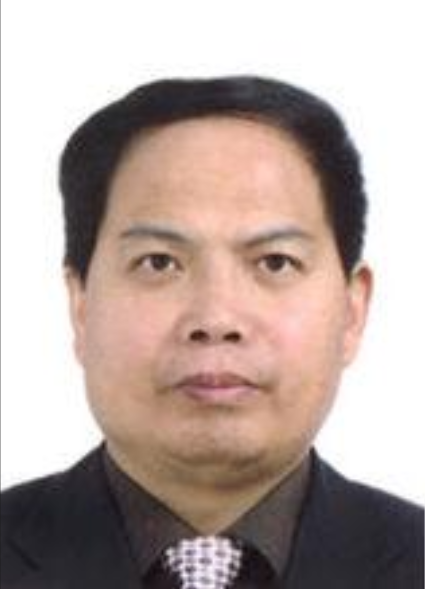 | Prof. Jiading WangNorthwest University, ChinaJiading Wang is a Grade II Professor and doctoral supervisor in the Department of Geology at Northwest University. He currently serves as Deputy Dean of the Institute of Surface Processes and Hazards. He is a Fellow of the Geological Society of China, a Foreign Academician of the Academy of Mining Sciences of the Kyrgyz Republic, and a recipient of the State Council Special Government Allowance. His research focuses on engineering geology and geological hazards, particularly the mechanisms, monitoring, identification, prevention, and control of loess-related hazards. He has made important contributions to the study of earthquake-induced landslides, vibration-enhanced infiltration, and wetting-induced shear and sliding. He has led projects funded under the National Major Scientific Research Instrument Development Program, key programs of the National Natural Science Foundation of China, and the National Key Research and Development Program. The resulting technologies have been applied to the construction of multiple railway lines and airports in China and abroad. His research achievements have received the Second Prize of the State Science and Technology Progress Award, as well as several first prizes at the provincial and ministerial levels. |
 | Prof.Chun’an TangDalian University of Technology, ChinaProfessor Chun’an Tang’s research centers on multiscale fracture processes and has established a comprehensive theoretical framework extending from microscopic mechanisms to macroscopic behavior. He pioneered the numerical method known as Rock Failure Process Analysis and developed a mesomechanical model that accounts for material heterogeneity. His work has revealed the cross-scale failure mechanisms through which rocks evolve from cumulative damage to macroscopic instability, laying an important theoretical foundation for rock failure mechanics. He also developed a dynamic early-warning technology integrating microseismic monitoring with numerical simulation. This technology has been successfully applied to rockburst prediction in deep underground engineering, helping to shift disaster prevention from static condition assessment toward active process regulation. Professor Chun’an Tang has further extended fracture-mechanics principles to the planetary scale and proposed an original theory of large-scale cracking in the Earth’s evolution. From the perspectives of thermo-mechanical coupling and global-scale fracturing, this theory offers a unified mechanical framework for explaining the origins of plate tectonics, supercontinent cycles, and major geological events. His research spans the temporal and spatial scales from rock fracturing to planetary evolution, demonstrating extensive interdisciplinary integration and systems thinking. |
 | Prof. Caichu XiaNingbo University, ChinaCaichu Xia is a professor and doctoral supervisor at Ningbo University. He currently serves as Deputy Director of the Institute of Rock Mechanics and Executive Chairman of the Deep Underground Energy Storage Branch of the Chinese Society for Rock Mechanics and Engineering. He was also appointed a Distinguished Professor under Zhejiang Province’s “Qianjiang Scholars” Program. Professor Caichu Xia has long been engaged in teaching and research in rock mechanics, tunneling, and underground engineering. His principal research areas include underground caverns for compressed-air energy storage, underground energy structures and storage facilities, and tunnel engineering in cold regions. He has conducted visiting research at Virginia Tech, the Colorado School of Mines, and Nanyang Technological University. He has led 11 projects funded by the National Natural Science Foundation of China and has undertaken or participated in numerous national science and technology projects and major engineering consultancy assignments. His work has resulted in multiple patents, academic monographs, and provincial- and ministerial-level science and technology awards. |
 | Prof. Faning DangXi’an University of Technology, ChinaProfessor Faning Dang has extensive experience in teaching and research in geotechnical and hydraulic engineering. He currently heads the university’s Postdoctoral Research Station in Civil Engineering, serves as the academic leader of the first-level doctoral discipline in Civil Engineering, and is responsible for a National First-Class Undergraduate Program. He also serves as Chairman of the Shaanxi Society for Geotechnical Mechanics and Engineering. He has led seven projects funded by the National Natural Science Foundation of China and more than 80 other research projects. He has proposed a range of theories and methods relating to variable-stiffness finite-element analysis, seepage through variable media, loess mechanics, seepage control in earth-rock dams, and the damage and failure of geomaterials. Professor Faning Dang has published more than 370 academic papers and supervised over 230 postdoctoral researchers and graduate students. He has participated in drafting and reviewing numerous national and local standards and has co-authored ten academic monographs. His honors include the First Prize for Science and Technology from Shaanxi’s higher-education institutions, the Grand Prize of the Chinese Society for Hydropower Engineering, and the title of “Most Outstanding Science and Technology Professional of Shaanxi.” |